
A client reaches out to me.
“I have Ksh 1 million and I want to invest in a fund that can give me around 20%.”
“Perfect,” I reply.
There are solid opportunities in the market:
Mansa-X Special Fund — 20.74% net return in 2025.
Arvocap Almasi Fixed Income Fund — 20.51% net return in 2025.
And several others.
Then I pause and ask one critical question.
“Before you invest that Ksh 1M, do you already have an emergency fund?”
Her response?
“No. What is that — and why do I need one?”
That’s where most investors get it wrong.
Your Emergency Fund Is Your Safety Vault
This is the money you deliberately set aside to protect your income, your investments,
and your peace of mind when life throws curveballs.
What an Emergency Fund Covers
Job loss or sudden income interruption.
Medical emergencies not fully covered by insurance.
Critical illness such as cancer, kidney failure, or stroke
(if you don’t have a critical illness cover).
Major car breakdown or accident.
Urgent home repairs — roof, plumbing, or electrical faults.
Family emergencies you’re financially responsible for.
Business cash-flow crises.
Fire, floods, or destructive accidents.
Legal or compliance emergencies.
Temporary relocation due to crisis.
This fund absorbs shock.
It turns financial emergencies that feel like mountains into mere anthills.
Why This Comes Before Investing
You should have at least three months of your living expenses saved in an emergency fund.
Why?
Without it, your investments are exposed.
One emergency forces you to withdraw from a growing fund.
You disrupt compound interest at its most powerful stage.
Or worse — you go into consumer debt.
And consumer debt quietly robs you of income and future investment capacity.
What an Emergency Fund Really Does
An emergency fund does two critical things:
It protects your investments.
It protects your income from bad debt.
The Correct Order
Before you rush to chase returns:
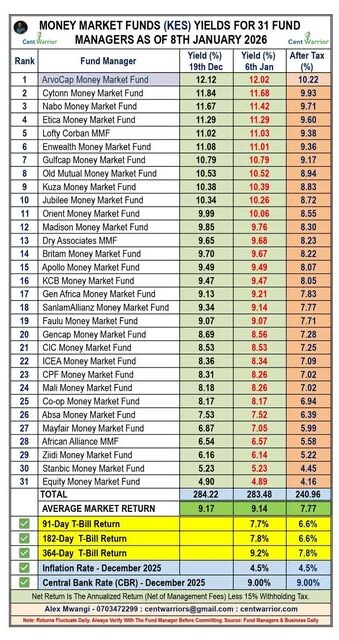
Open a Money Market Fund.
Secure at least three months of your expenses.
Then — and only then — move into growth funds.
That’s how serious investors operate.
You invest with confidence, calm, and clarity —
knowing no financial shock can knock you off course.
Need Help Choosing an MMF?
If you’re unsure which Money Market Fund to choose among the 31 in the market,
WhatsApp me “EMERGENCY MMF” and I will recommend one of the best.
Alex Mwangi | WhatsApp 0703472299