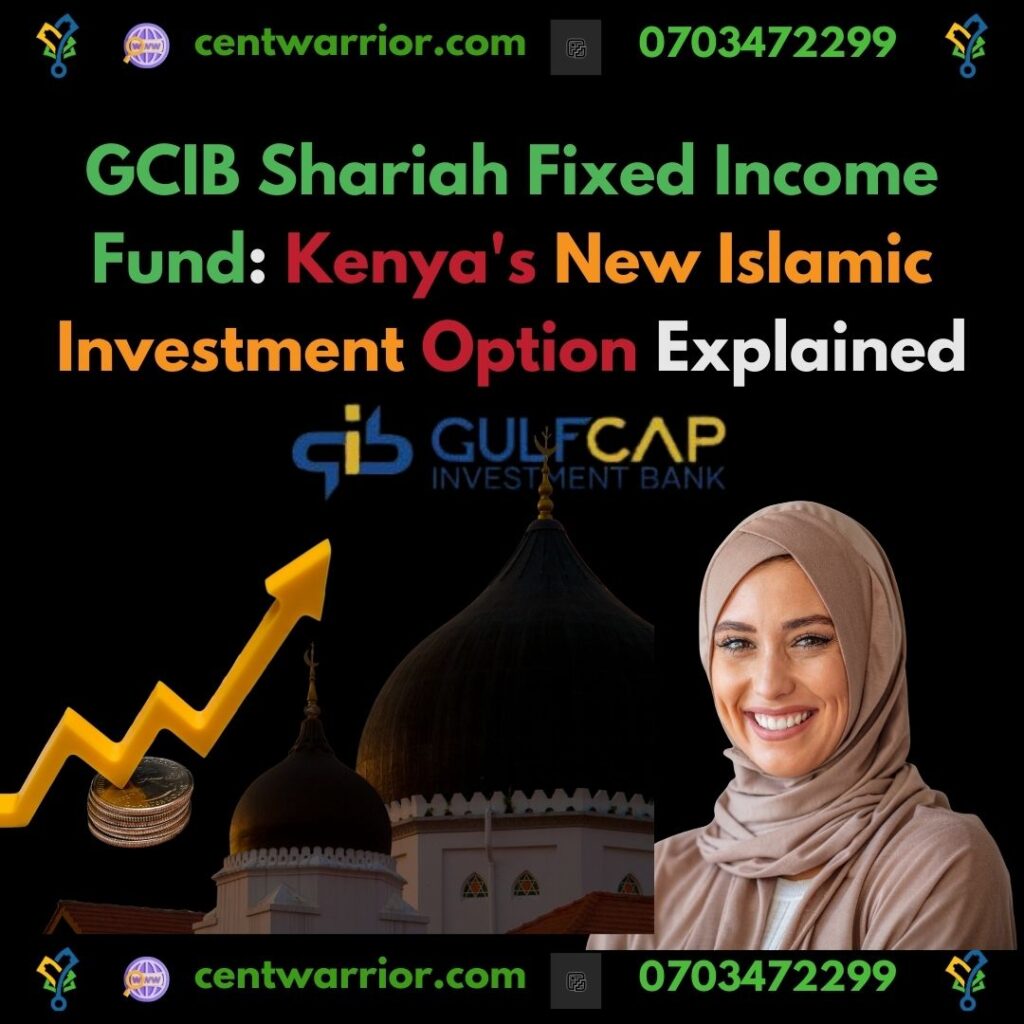
Finding investment options that respect Islamic principles while generating competitive returns has been a persistent challenge for Muslim investors in Kenya. The launch of the GCIB Shariah Fixed Income Fund in 2024 adds a fresh alternative to Kenya’s limited selection of Shariah-compliant investment products.
Approved by the Capital Markets Authority and managed by GulfCap Investment Bank (GCIB), this fund represents one of the newest entrants in Kenya’s growing Islamic finance sector.
For Muslims who want their money to work for them without compromising their faith, and for anyone interested in ethical, interest-free investing, understanding what this fund offers matters.
Let’s cut through the marketing language and examine what the GCIB Shariah Fixed Income Fund actually delivers.
What Is the GCIB Shariah Fixed Income Fund?
The GCIB Shariah Fixed Income Fund is a unit trust that invests exclusively in Shariah-compliant fixed income instruments.
Unlike conventional bonds, which pay interest (prohibited as riba in Islam), this fund utilises Islamic financial structures that generate returns through profit-sharing, asset ownership, and trade-based arrangements.
Managed by GulfCap Investment Bank—a firm established in 2011 and licensed by Kenya’s Capital Markets Authority in 2022—the fund specifically targets investors seeking medium to long-term growth within Islamic finance frameworks.
Key Approval Details:
The Capital Markets Authority approved the GCIB Shariah Fixed Income Fund in 2024 as part of a broader GulfCap unit trust scheme that includes:
- GCIB Multi-Asset Special Fund
- GCIB Shariah Fixed Income Fund
- GCIB Shariah Multi-Asset Special Fund
This approval brought Kenya’s total number of registered collective investment schemes to 40, reflecting growing institutional recognition of demand for Shariah-compliant products.
How Islamic Fixed Income Investing Actually Works
For many Kenyans unfamiliar with Islamic finance, the concept of “fixed income without interest” sounds contradictory. How do you generate steady returns without the interest payments that define conventional bonds?
Islamic finance uses several Shariah-compliant structures:
Sukuk (Islamic Bonds): Instead of lending money for interest, sukuk holders own a share of an underlying asset (real estate, infrastructure, business ventures). Returns come from the asset’s performance—such as rental income, profits, or sale proceeds—not interest payments.
Murabaha (Cost-Plus Financing): The bank buys an asset at cost and sells it to the customer at a disclosed markup. Both parties agree on the price and payment terms upfront. The profit margin replaces interest but represents compensation for a real transaction, not lending money.
Ijara (Islamic Leasing): Similar to conventional leasing, but structured so that the fund owns the assets and leases them to users. Lease payments generate income, and the asset may be sold later for capital appreciation.
Commodity Murabaha: Used for short-term liquidity management, involving the purchase and sale of commodities (often metals) in Shariah-compliant structures.
The GCIB Shariah Fixed Income Fund is likely to employ a combination of these instruments, although specific allocation details aren’t publicly available in the current marketing materials.
Critical Element: Shariah Supervision
Legitimate Shariah funds maintain a Shariah Advisory Board, comprising scholars qualified in Islamic jurisprudence and finance, who review all investments for compliance. This oversight distinguishes genuine Islamic finance from conventional products with Islamic branding.
GCIB Shariah Fixed Income Fund: What We Know (And Don’t Know)
Here’s what publicly available information tells us about the fund:
| Fund Characteristic | Verified Information | Status |
| Fund Manager | GulfCap Investment Bank (GCIB) | ✓ Confirmed |
| Regulatory Approval | CMA approved 2024 | ✓ Confirmed |
| Fund Type | Shariah Fixed Income | ✓ Confirmed |
| Launch Status | Approved, operational status unclear | Limited data |
| Minimum Investment | Not publicly disclosed | ✗ Unavailable |
| Management Fee | Not publicly disclosed | ✗ Unavailable |
| Target Returns | Not publicly disclosed | ✗ Unavailable |
| Asset Allocation | Not publicly disclosed | ✗ Unavailable |
| Shariah Board Members | Not publicly disclosed | ✗ Unavailable |
| Performance Data | Not publicly disclosed | ✗ Unavailable |
The Transparency Problem:
As of December 2025, detailed public information about the GCIB Shariah Fixed Income Fund remains limited. Unlike GCIB’s conventional funds (Money Market Funds and Fixed Income Funds), which have published fact sheets with performance data, asset allocations, and clear terms, the Shariah Fixed Income Fund lacks readily accessible documentation.
This opacity presents challenges for potential investors who seek to make informed decisions based on the actual characteristics of the fund, rather than relying on general marketing statements.

How GCIB Shariah Fixed Income Fund Fits Kenya’s Islamic Finance Landscape
Kenya’s Shariah-compliant investment sector remains small but growing. Understanding where the GCIB fund fits requires context:
Kenya’s Shariah Fund Market (September 2025 Data)
| Fund Name | Type | AUM (KES Million) | Manager |
| Etica Shariah Fund | Money Market | 85.0 | Etica Asset Management |
| Ziidi Shariah Money Market | Money Market | 27.6 | GCIB (partnership) |
| Amana Shilling Fund | Money Market | 17.5 | Amana Capital |
| Etica Shariah Fund USD | Money Market | 11.2 | Etica Asset Management |
| Arvocap Mabruk Sharia Fund | Special Fund | 7.3 | Arvocap |
| GCIB Shariah Fixed Income | Fixed Income | Data unavailable | GCIB |
| GCIB Shariah Multi-Asset | Special Fund | Data unavailable | GCIB |
Market Context:
Combined, Kenya’s Shariah funds manage well under KES 1 billion—a tiny fraction of the country’s KES 679.6 billion total unit trust market. This reflects both limited product availability and modest awareness among Kenya’s Muslim population.
GCIB’s Unique Positioning:
Most existing Shariah funds focus on money market instruments for maximum liquidity and capital preservation. A dedicated Shariah fixed income fund targeting medium-term returns through sukuk and Islamic bond equivalents represents a genuinely different offering—if properly implemented.
The challenge: Kenya’s domestic sukuk market remains underdeveloped. The Kenyan government has issued limited sukuk compared to countries like Malaysia or the UAE. This constrains local investment options, potentially forcing the fund to access international Islamic securities (with currency risk implications) or rely heavily on Shariah-compliant bank deposits.
GulfCap Investment Bank: The Manager Behind the Fund
Understanding the fund manager matters when evaluating any investment. Here’s what we know about GCIB:
Company Background:
- Established: 2011
- CMA Fund Manager License: 2022
- Regulatory Body: Capital Markets Authority (Kenya)
- Office: Block A, 5th Floor, Merchant Square, Riverside Drive, Nairobi
GCIB’s Service Divisions:
- Asset & Wealth Management: Unit trusts, private wealth management, Shariah investments
- Corporate Finance: Advisory, equity/debt raising, restructuring
- Diaspora Services: Remittance solutions, diaspora investment facilitation
- Ventures: Financial consulting, modeling, feasibility studies
Other GCIB Funds:
GCIB manages conventional products alongside Shariah offerings. They include:
GCIB Money Market Fund:
- Launch: March 2024
- Returns: 10.29% p.a. (September 2025)
- Minimum: KES 1,000
- Fee: 2% annual management
- Risk: Low
GCIB Fixed Income Fund:
- Launch: March 2024
- Returns: 10.69% p.a. (September 2025)
- Minimum: KES 1,000
- Lock-in: Optional 3, 6, or 12 months
- Fee: 2% annual management
- Risk: Low
And lastly
GCIB Shariah Funds:
- GCIB Shariah Fixed Income Fund (subject of this guide)
- GCIB Shariah Multi-Asset Special Fund
- Partnership with Safaricom on Ziidi Shariah Money Market Fund
Track Record Assessment:
As a fund manager licensed in 2022, GCIB lacks the decades-long track record of established firms like CIC, Britam, or Sanlam. The conventional funds launched in March 2024 have delivered respectable returns (10.29% and 10.69%), though these represent less than two years of performance data.
For the Shariah Fixed Income Fund specifically, we lack performance history to evaluate management quality, Shariah compliance processes, or consistency of returns.
Who Should Consider the GCIB Shariah Fixed Income Fund?
Given the limited public information, making definitive recommendations is challenging. However, we can outline who might benefit and who should probably wait:
Potentially Good Fit:
- Practicing Muslims seeking medium-term Shariah-compliant options beyond money market funds
- Investors who’ve already researched GCIB directly and received satisfactory answers about fund structure, fees, and performance
- Those who value supporting newer Islamic finance initiatives in Kenya
- Investors comfortable with a limited track record in exchange for early access to a new product
- Anyone willing to start with small test amounts while the fund establishes itself
Probably Not a Good Fit:
- Investors requiring detailed public documentation before committing funds
- Those seeking well-established Shariah funds with multi-year track records
- Anyone needing immediate liquidity (fixed income funds typically have redemption processes)
- Investors uncomfortable with funds that haven’t published performance data
- Those prioritizing maximum returns over Shariah compliance
- Risk-averse investors requiring absolute capital protection
The Transparency Consideration:
The lack of publicly available fact sheets, performance reports, asset allocation details, and Shariah Board information is concerning. Investors deserve clear, accessible information to make informed decisions. Until GCIB publishes comprehensive documentation about the Shariah Fixed Income Fund, cautious investors might reasonably choose to wait.

Get Your Free CentWarrior Wealth Masterplan E-Book Here!
Questions Every Potential Investor Should Ask
Before investing in the GCIB Shariah Fixed Income Fund, get clear answers to these questions directly from the fund manager:
Investment Terms
- What is the minimum initial investment?
- What is the minimum top-up amount?
- What are the total annual fees (management, custodian, trustee, other)?
- Are there entry or exit fees?
- Is there a lock-in period? What are the withdrawal terms?
Shariah Compliance
- Who sits on the Shariah Advisory Board? What are their qualifications?
- What methodology determines Shariah compliance?
- How is the purification process handled if an investment becomes non-compliant?
- Are Shariah audit reports published and accessible to investors?
- What percentage of returns (if any) gets purified/donated due to non-compliant elements?
Investment Strategy
- What specific instruments does the fund invest in (sukuk, murabaha, ijara, etc.)?
- What is the asset allocation breakdown?
- Does the fund invest solely in local sukuk, or also in international Islamic securities?
- How is currency risk managed when investing in foreign-denominated sukuk?
- What is the target return range?
Performance & Reporting
- What has been the fund’s performance since launch?
- What benchmark does the fund use?
- How frequently are investor reports provided?
- Where can I access monthly/quarterly fact sheets?
- How does performance compare to conventional fixed income alternatives?
Operational Details
- Who serves as custodian? Who is the trustee? Who audits the fund?
- How do I invest (e.g., bank transfer, M-Pesa)?
- How long does the redemption process typically take?
- What tax treatment applies to returns?
- Can I access my account online? Is there a mobile app?
Red Flags to Watch For:
- Reluctance to provide written documentation
- Vague answers about Shariah compliance processes
- Inability to clearly explain fee structures
- No published performance data after operating for several months
- Shariah Board members with unclear credentials
- Pressure to invest quickly without time for due diligence
The Broader Islamic Finance Context in Kenya
The GCIB Shariah Fixed Income Fund emerges in a market where Islamic finance remains underdeveloped despite a significant Muslim population:
Market Size: Kenya’s Shariah-compliant investment funds collectively manage less than 0.2% of the total unit trust market.
Growth Drivers:
- Increasing awareness among Muslim investors
- Ethical investing appeal beyond religious requirements
- Regulatory support from the Capital Markets Authority
- Success of Islamic banking (Gulf African Bank, First Community Bank’s Islamic windows)
Barriers to Growth:
- Limited awareness and financial literacy about Islamic finance
- Underdeveloped sukuk market in Kenya
- Higher transaction costs for Shariah-compliant structures
- Shortage of qualified Shariah scholars in finance
- Competition from conventional products offering higher liquidity and transparency
What Success Looks Like:
For the GCIB Shariah Fixed Income Fund to meaningfully serve Kenya’s Muslim investor community, it needs:
- Transparent, regularly published factsheets with performance data
- Clear disclosure of Shariah Advisory Board members and qualifications
- Competitive returns that justify choosing Shariah compliance
- Accessible minimum investments (KES 1,000-5,000 range)
- Straightforward investment and redemption processes
- Educational resources explaining Islamic finance principles
- Professional customer service responsive to investor questions
Investment Process (General Guidance)
While specific GCIB Shariah Fixed Income Fund procedures aren’t publicly detailed, investment in GCIB funds typically follows these steps:
1: Initial Contact
- Office: Block A, 5th Floor, Merchant Square, Riverside Drive, Nairobi
- Phone: +254 715 773333
- Email: clientservices@gcib.africa
- Website: gcib.africa
2: Documentation
- National ID/Passport
- KRA PIN certificate
- Proof of address
- Completed KYC forms
- Account opening application
3: Fund Selection
- Specify GCIB Shariah Fixed Income Fund
- Understand terms, lock-ins (if any), and fee structure
- Receive account number/reference
4: Initial Investment
- Bank transfer to I&M Bank account (likely similar to other GCIB funds)
- Or M-Pesa to designated paybill
- Retain transaction confirmation
5: Confirmation
- Receive email confirmation within 1 business day
- Verify unit allocation and pricing
- Request clarification immediately if details unclear
6: Ongoing Management
- Top up as desired (check minimum)
- Monitor performance via reports
- Request withdrawals as needed per fund terms
Tax Considerations for Shariah Investments
Kenya’s tax authorities don’t differentiate between conventional and Shariah-compliant investment returns for individual investors:
Withholding Tax: 15% automatically deducted from investment income before returns are calculated. This applies regardless of whether returns come from interest (conventional) or profit-sharing (Shariah-compliant).
Capital Gains: Individual unit trust investors typically aren’t separately taxed on capital gains. The 15% withholding tax on income represents the primary tax obligation.
Islamic Perspective: Some Islamic scholars debate whether conventional taxes on Shariah investments align with zakat obligations. This is a complex fiqh question that falls beyond the scope of this guide. Consult qualified Islamic scholars if you have concerns about tax treatment with your religious obligations.
Returns Quoted: Any performance figures should already reflect the 15% withholding tax deduction, so they represent your actual after-tax returns.

Alternative Shariah-Compliant Options in Kenya
Before committing to the GCIB Shariah Fixed Income Fund, consider these alternatives:
Money Market Funds (Higher Liquidity, Lower Returns):
- Etica Shariah Fund: Established track record, KES 85 million AUM
- Ziidi Shariah Money Market: Digital-first platform, M-Pesa integration
- Amana Shilling Fund: Longer operating history
Special Funds (Higher Risk, Potentially Higher Returns):
- Mansa-X Shariah Special Funds: Multi-asset global strategy, Standard Investment Bank
- Arvocap Mabruk Sharia Fund: Specialized Shariah equity
- GCIB Shariah Multi-Asset Special Fund: GCIB’s other Shariah offering
Islamic Banking Products:
- Gulf African Bank: Fully Shariah-compliant banking
- First Community Bank: Islamic windows
- Returns typically 1-4% but with capital protection
Direct Sukuk Investment:
- Limited availability in Kenya
- Usually requires higher minimums (KES 50,000+)
- Locks funds until maturity
- Access to international sukuk through specialized platforms
Comparison Consideration:
Etica Shariah Fund (money market) delivered competitive returns with transparency and regular reporting. If the GCIB Shariah Fixed Income Fund targets 12-13% returns versus Etica’s 10-11%, the additional 1-2% might justify the choice—but only if accompanied by comparable transparency and professional management.
Making Your Decision: A Balanced Perspective
The GCIB Shariah Fixed Income Fund addresses a genuine gap in Kenya’s investment landscape. Muslim investors need accessible, professionally managed, Shariah-compliant options beyond basic Islamic bank accounts.
Potential Strengths:
- Fills a gap in medium-term Shariah fixed income products
- CMA regulatory approval provides baseline oversight
- Managed by a licensed, growing Islamic finance provider
- Likely accessible minimum investment (based on GCIB’s other funds)
- Supports development of Kenya’s Islamic finance sector
Concerns Requiring Attention:
- Very limited public documentation as of December 2025
- No published performance data
- Shariah Advisory Board members not publicly identified
- Asset allocation and investment strategy unclear
- New fund from relatively new manager (licensed 2022)
- Small market size raises questions about liquidity
Practical Recommendation:
If you’re interested in the GCIB Shariah Fixed Income Fund:
- Contact GCIB directly with the 25 questions listed earlier
- Request written documentation: factsheets, fee schedules, Shariah Board credentials
- Start very small if you decide to invest—the minimum amount only
- Monitor closely: Are reports timely? Is customer service responsive?
- Evaluate over 6-12 months before increasing your investment
- Compare alternatives: How does it stack up against Etica, Mansa-X Shariah, or even conventional fixed income funds?
Don’t invest based solely on:
- Religious obligation without proper due diligence
- Sales presentations lacking written documentation
- Pressure to commit quickly
- General trust in Islamic finance without specific fund verification
The Bigger Picture:
Kenya’s Islamic finance sector requires high-quality products with transparent operations to foster investor confidence. The GCIB Shariah Fixed Income Fund can contribute positively—but only if GCIB commits to the transparency, reporting, and professional standards that Muslim investors deserve.
For now, this remains a “proceed with caution” opportunity. The fund’s approval is genuine, the need it addresses is real, and GCIB’s other products have shown reasonable performance. But without detailed public information, making an informed investment decision requires extra effort to obtain documentation directly from the fund manager.
As Kenya’s Islamic finance market matures, investor demand for transparency will drive better disclosure. Until the GCIB Shariah Fixed Income Fund publishes comprehensive fact sheets, potential investors should either request detailed information directly or consider waiting for the fund to establish a publicly documented track record.
Before You Go – Visit My Resources Hub for information about the masterclass, coaching sessions, latest financial e-books, the Centwarrior social media family, and more!